Latest Post

Watch this intense footage of a drone crashing into an erupting volcano

Nobody likes to lose a drone, but should the tragic event ever occur, you'd at least hope your plucky metal pal would go down in a blaze of glory.

That's exactly what happened to filmmaker Joey Helms' DJI FPV drone recently in Iceland, when he decided to send it on a mission to explore Fagradalsfjall — a volcano on Iceland's Reykjanes Peninsula that was in the process of erupting (the newly opened fissure drew plenty of attention this year).

Unfortunately the drone got a little too close to the lava spurts and ended up going down, Icarus-style — but at least its final broadcast was undeniably spectacular. Read more...

More about Iceland, Volcanoes, Science, Climate Environment, and Drones


via Tingle Tech

Building collisions kill up to a billion birds every year in the U.S. Here’s how cities can fix that.

Our built environment contributes to hundreds of millions of bird deaths. Migratory birds are well adapted for long flights, using the sun, stars, and the Earth's magnetic field as navigation. But once they enter cities, it's a very different — and often perilous — story. 

According to Jason Weckstein, curator of ornithology and associate professor at the Academy of Natural Sciences at Drexel University, a few simple design tweaks in cities can make an enormous difference. Read more...

More about Glass, Lights, Cities, Migratory Birds, and Collision


via Tingle Tech

Learn more about yourself with a premium DNA kit on sale

TL;DR: Learn about your ancestry with the Vitagene DNA Ancestry Test Kit, on sale for 43% off. As of June 1, snag one for only $78.97.


The past year was definitely one for self-reflection, and if you felt this personally, you might be wanting to learn more about your own background. With the Vitagene DNA Ancestry Test Kit, you can get the answers to questions you're curious about — even if you don't have anyone in your family you can ask. 

But DNA test kits are so much more than discovering your ancestry. There are also kit options that can help you explore not only your ancestry, but also insights into your health. Read more...

More about Mashable Shopping, Dna Kit, Culture, and Work Life


via Tingle Tech

When two of Indonesia’s biggest companies — ride-hailing company Gojek and e-commerce marketplace Tokopedia — joined forces as GoTo Group last month, a key highlight from the merger was that the last-mile delivery space is still a huge global trend.

In Nigeria, the e-commerce and last-mile delivery market is projected to be worth over $20 billion in the next five years. Big players like Jumia have considerable market share yet smaller platforms are increasingly carving out theirs. One of such is ride-hailing-turned-logistics company Gokada.

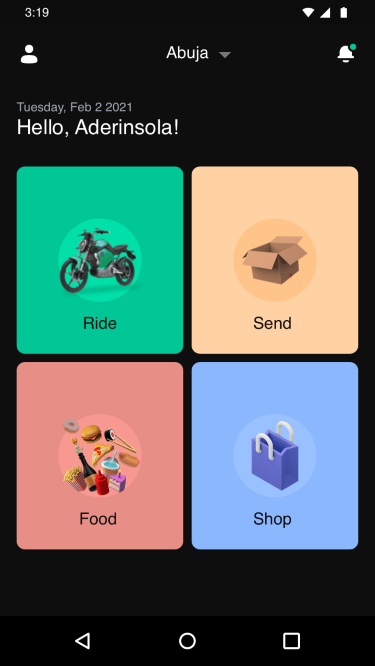
Gokada launched in 2018 as a ride-hailing company in Lagos, Nigeria. But in 2020, Gokada began offering logistics (Gsend) and food delivery services (GShop) after a ride-hailing ban by the Lagos State government affected its operations. Today, the company is combining all these services (which have operated independently in the past) into a single application.

“In September and October, we launched GShop which is the food delivery platform for Gokada. What we realized from our customers was that while they were using the Gsend and GShop separately, they came to us asking if we could put them together,” said Gokada CEO Nikhil Goel to TechCrunch. “So doing this is more like a transition from other things we were doing and making it easier for our customers to have all our services in one platform and create a super app.”

Gokada’s super app plans are coming off the back of an impressive year for the company despite a troubling first few months during the pandemic. As early as February, the company downsized and laid off more than half its staff after the ban on motorcycles in Lagos. It quickly pivoted to logistics and food delivery and hasn’t looked back.

This past year, Gokada has crossed over $100 million in annualized transaction value. It has also helped more than 30,000 merchants on its platform to execute over 1 million food delivery and e-commerce orders.

“Before Gokada ventured into ride-hailing in Lagos, people questioned us. When we entered the delivery space, it was the same question people asked. They said we didn’t have the experience. But today, if you look at it critically, we’ve changed this market in a different manner,” Goel said. 

Goel, who took over the reins at Gokada this March after founder Fahim Saleh tragically passed on, has been instrumental to the company’s impressive growth so far. Per information shared by Gokada, the company’s volume growth has increased 3x in the last six months while revenue increased 10x within the past year.

Gokada

Image Credits: Gokada

Before becoming CEO, Goel had three roles since joining the company in 2019 — VP of Rides, COO, and acting president. Previously, he also co-founded Indian edtech startup Classplus and worked as a general manager at Indian food delivery giant Zomato. His stint at Zomato and knowledge of the food-delivery and logistics space will be key to how Gokada pulls off its super app ambitions.

Although Gokada is only present in Lagos, the company is looking to launch its services across other cities including Abuja, Port Harcourt, Ibadan and Ogun. And not only will the super app allow Gokada customers in these cities to access food delivery, e-commerce (medicines and groceries among other supplies), and logistics, but they will be able to use ride-hailing services.

The company plans to start with neighbouring markets to Lagos — Ogun and Ibadan. In the latter, there’s already a ride-hailing platform in the form of SafeBoda. The company, which is present in Uganda and Nigeria, employs a super app model in the East African country but offers only ride-hailing services in Ibadan, the only Nigerian city where it operates.

For much of last year, SafeBoda has enjoyed dominance in the southwestern city but Gokada’s arrival, especially as it plans to offer other services, might threaten its commanding position.

“We started with its ride-hailing service in Lagos. We were mostly known as one of the pioneers of ride-hailing in Lagos before the ban. So far, we’ve not ventured outside Lagos, and the reason for that has been that we wanted to remain focused on our new business here. And it’s evident that when you move across Lagos, you will see our delivery bikes everywhere on the road. But ride-hailing will always stay with us wherever we go outside the city,” the CEO added. Gokada is in talks to secure operational licenses for ride-hailing but has already acquired a NIPOST licence to mitigate future risks on the regulatory front and allow them to operate courier logistics services across the country.

While services in a super app can differ from one platform to another, payments is the defining functionality that ties those offerings together. For now, Gokada only provides a subset of that which is a wallet feature and a debit card option to pay for these services. On why this is the case, Goel said: “Before many of these companies like Grab and Gojek got into payments, they were providing other services. The idea for a super app is to provide customers with different services under one umbrella to ease their lives. That’s what we’re doing but we’re open to a payments play in the future.”

Unlike other markets in Asia, Africa doesn’t have clear leaders in the super app race. Therefore, Gokada will join a growing list of platforms clamouring for supremacy in their respective markets, a spot OPay seemed to be gunning for before shutting down its non-fintech verticals last year to focus on its payment services. 


via Tingle Tech

Line Corporation, best known for its messaging app, launched a digital banking platform in Indonesia today. This means Japan-based Line Corp. now offers banking services in three of its biggest overseas markets: Indonesia, Thailand and Taiwan.

Line Corp.’s Indonesian banking platform is the result of a partnership the company struck in 2018 with PT Bank KEB Hana Indonesia, a subsidiary of South Korea’s Hana ZBank. Line Corp. agreed to acquire 20% of PT Bank KEB Hana Indonesia, making it the bank’s second-largest shareholder, and said it would work on online banking services, including deposit accounts, microcredit products, and remittance and payment services.

According to a report by Momentum Works, downloads of digital banking apps in Indonesia grew 7% in 2020, with apps from established banks like BTPN Jenius, OCBC Nyala and Permata leading. But Momentum Works also observed that “many Indonesian digital bank users tend to download multiple digital bank applications and explore around,” so a dominant player hasn’t emerged yet. Major tech companies like Sea Group, Grab and Gojek are also working on their own neobank services.

Line introduced banking services to its Thai users last October, as part of a joint venture with Kasikorn Vision Company, a subsidiary of Kasikorn Bank. In Taiwan, its subsidiary Line Bank Taiwan was granted a banking license earlier this year by the Financial Supervisory Commission.


via Tingle Tech

Freight forwarding — the process of organising how and where items will be shipped around the world, and specifically the technology that underpins that work — continues to be a huge area of the logistics market, not least because of the huge boom in e-commerce in the last year, and because of the Covid-19-mandated need to simply be more efficient in how things are being moved around. Today, one of the bigger players in that space is announcing more funding to capitalize on the opportunity.

Sennder, a digital freight forwarder that focuses on moving cargo around Europe (and specifically focusing on trucks and “full truck load”, FTL, freight forwarding), has raised $80 million in funding, at a valuation that the company confirms is now over $1 billion.

The Berlin-based startup has been on something of a funding tear this year. In January, it announced a $160 million round, and this $80 million is closing out its Series D. Baillie Gifford has led this latest Series D extension, with Hedosophia, Accel, Lakestar, HV Capital, Project A and Scania all participating in the previous part of the Series D.

The funding makes Sennder, which has now raised some $350 million, one of the most well-funded of the freight forwarders, but it’s a hot area at the moment. Another player out of Europe, Zencargo, picked up $42 million just last month. Other competitors include the likes of Flexport in the US.

Sennder is growing organically, but it’s also making some acquisitions to scale up — a mark not just of the activity in the market but also the fragmentation. In May, it acquired Cars&Cargo to give it a stronger presence in France and Benelux. Other companies that it has acquired have included Uber Freight Europe and Everoad in 2020, and it also operates a JV with Poste Italiane, Italy’s postal service. Altogether it now has eight hubs in Europe.

The plan will be to make more acquisitions of this kind, the company said, to expand a network that now covers 12,500 trucks that it says works with ten German DAX 30 and eleven Euro Stoxx 50 shippers and is expected to move more than 1 million truckloads in 2021.

“We are delighted to have carried our momentum from 2020 into 2021, having already made one acquisition and signed several strategic partnerships,” said David Nothacker, CEO and Co-Founder of sennder, in a statement. “We look to expand our European footprint, bringing more carriers and shippers onto the sennder platform, while expanding our digital offering – such as SaaS. Acquisitions and strategic partnerships are part of this strategy – the additional funds give us the flexibility to capitalize on the right opportunities. Baillie Gifford has backed a wave of revolutionary tech companies; their commitment to sennder is a vote of confidence in our team, technology, and business model.”

Stephen Paice, Co-manager, Baillie Gifford European Growth Trust PLC, added: “We are delighted to join the sennder team on its journey to disrupt Europe’s logistics industry. We strongly believe its technology has the potential to create tremendous value for stakeholders and society in an industry plagued with inefficiencies and needless CO2 emissions. What’s particularly impressive, beyond the progress shown so far, is the purpose-driven and entrepreneurial mind-set instilled within the company. This will no doubt be an important factor for long-term success.”


via Tingle Tech

The world of professional services has long relied on contractors to fill in for assignments and projects that might not be a part of the course of daily work, but are essential work nonetheless. Today, a startup that’s built a marketplace to make it easier for freelance developers, designers and others with technical skills with those job opportunities is announcing a significant round of funding to expand its business.

Malt, which provides a way for developers, data scientists, designers, project managers and others working in related fields to connect with fixed-term job opportunities in their fields, has picked up €80 million ($97 million at today’s rates), money that the company plans to use to expand its business to more markets.

We understand from sources that the investment — led by Goldman Sachs Growth Equity and Eurazeo — values Malt at €400 million ($489 million).

Vincent Huguet, Malt’s CEO who co-founded the company with Hugo Lassiège and Jean-Baptiste Lemée, said in an interview that the funding in part will be used towards continuing to expand the company across Europe with a view to, longer term, also breaking into the U.S. In Europe, the company was founded in Paris, and it currently has operations in France (Paris, Lyon), Germany (Munich), and Spain (Madrid). The plan is to extend that to Benelux next, with the UK and Italy company after that.

The company has to date amassed 250,000 freelancers in its community, with 30,000 businesses tapping this pool to fill jobs. End customers include the likes of Unilever, Lufthansa, Bosch, BlaBla Car, L’Oreal and Allianz, and it also partners with traditional consultancies like McKinsey to help them source people for projects. Altogether the company has handled some €300 million in business since being founded in 2013.

These numbers, it seems, are just the tip of the iceberg. It’s estimated that there are some 6 million people in Europe working as freelancers today, and Malt estimates that the freelance consulting market is worth some €350 billion annually in the region.

Although recruitment for many parts of the economy has largely gone digital in the last two decades, Malt is tackling a part of the temp economy that has ironically held a strong offline presence.

“The most important thing is that we are a very open marketplace, an Airbnb-style search marketplace,” he said. “It’s all really based on our search engine. In a market that is very opaque, where offline and online players [those connecting technical workers with jobs] are protecting their bases, we have opened the information.” It also provides payment services and advanced solutions for some of its customers once people are engaged, he added.

“Freelancer” is a pretty loaded term in the tech world today — it could mean anything from a gig worker delivering food, driving you around or cleaning a house, from the plethora of people who work on fixed-term contracts, and soemtimes the implications are not great. Critics will say companies lean on the freelancer model in order to skirt around having to provide extensive benefits to those doing the jobs.

Malt is working in a somewhat different area, focusing on a gap in the market that has been around for a long while, finding people with specific, valued technical skills to fill in for project-based work, but has often been a tough one to crack for employers, Huguet said.

“We are going after those who charge a few hundred dollars per day and connecting them with mid- and large-sized companies,” said Huguet, who described Malt as very different from the likes of Fiverr, which also lets people find skilled workers but focuses on finding the lowest bidder for a job. “You search for a specific freelancer as the employer. You don’t post a specific task for freelancers to respond.” The average time of engagement is around three weeks but might be as long as three months, he said.

What has been interesting — and has definitely had an impact on how Malt has grown, and the investment it’s announcing today — is how much the working world has shifted in the last year and a half. Not only has Covid-19 changed how people work in offices — if they are working in offices at all anymore — but the rapidly changing circumstances have somewhat played into the idea of building out work strategy on more concrete short- and medium-term goals, with longer-term remaining a conditional. This fits the kind of jobs that Malt typically helps fill requirements for, and the changes also has meant more workers coming into Malt’s universe looking for work.

“What we can see already and predict in the next quarters is that we will be a post covid winner,” Huguet said. “People are now considering different options. The idea of a full-time employee was that when everyone was in office people knew how to work 9-6, and that’s what was expected. Now that people are working on projects, employers are more open to consultants. This plus the bigger hiring freezes helped us grow much faster. The market and the mindset have changed.”

Similarly, people who might have previously looked first for full-time employment are now feeling more secure putting their eggs into the freelance basket. “More than 90% of freelancers are joining us by choice,” he added.

What will be interesting is to see how and if companies like LinkedIn, which has been a strong player in professional recruitment, make more headway in this space, on the back of a launch of a freelancer marketplace earlier this year.

“We are watching what it’s doing, but we think it will be hard for them to do,” Huguet said. He pointed out that LinkedIn’s profiles today are dedicated to classic recruitment, so doing the matching for freelance is very different.

Regardless of how LinkedIn’s interest plays out, its activity there also points to a big opportunity, one big reason for why investors are backing Malt right now.

“Malt is at a pivotal time in its development. This new round of funding will allow the company to scale rapidly and drive even greater impact,” said Yann du Rusquec, a partner at Eurazeo. “We are excited to partner with Vincent and Alexandre—and offer the expertise of our Growth and Venture teams along with the depth of Eurazeo’s network in Europe—to drive Malt’s future success.”

“We are delighted to support Malt to build the leading freelance marketplace in Europe,” added Alexandre Flavier, executive director at Goldman Sachs Growth Equity. “Malt is at the forefront of the future of work, promoting agility, innovation, impact, freedom of choice, making freelancing simpler and more reliable. We are excited to partner with Malt’s founders, empower their community of highly skilled freelancers, and give companies access to the world’s best freelance talents.”


via Tingle Tech

Contact Form

Name

Email *

Message *

Powered by Blogger.