Latest Post

Rep. Marjorie Taylor Greene started off her 2022 with a ban. That's not a typo — she was permanently suspended from Twitter on Sunday, after repeatedly posting false and misleading information about COVID and vaccines, which violated the platform's misinformation policy.

Naturally, Late Show host Stephen Colbert had to address this development in his first monologue of the year.

"That's right, she is outta there," Colbert said, over the sound of his audience absolutely hooting and hollering at the news. "Now to spread the word about Jewish space lasers, she'll have to use Mormon carrier pigeons."

But it wasn't just Greene's self-inflicted L he had jokes for. Colbert took a dig at Twitter itself, suggesting that its five-strike policy for violating the rules about misinformation seems, perhaps, a little generous compared to the traditional three.

"Yes, five strikes," he repeated (quoting this very website's coverage, we must note). "Fool me once, shame on you. Fool me twice, shame on me. Fool me three times? You'll only get two more foolin's after that."


via Tingle Tech

The year 2021 saw more and bigger deals closed in Africa, as tech startups across the continent raised close to $5 billion. This amount was double the previous year’s investment, and nine times what was raised five years ago, an indication of how much the startup scene has transformed over the last few years.

Fintechs dominated the fundraising, accounting for $3.1 billion, or two thirds of all the investment realized by startups across the continent last year, a report by markets insights firm Briter Bridges shows. This amount was also more than double the $1.35 billion investment that fintechs in Africa raised in 2020, and triple the amount in 2019.

Among the largest beneficiaries of the fintech capital were Opay, which raised $400 million in  Series C funding, Flutterwave, which got $170 million in a Series C round, and TymeBank, which raised $180 million in Series B. Jumo and MNT Halan raised $120 million rounds, as digital payments gateway MFS Africa gained $100 million. This was as Zepz (formerly WorldRemit) raised $292 million in Series E financing, while Chipper Cash raised $250 million , Tala $145 million as Wave sealed $200 million in funding.

And, given the incremental funding for fintechs in Africa over the years, capital injected into these startups is only likely to increase with deepening mobile phone usage and internet penetration. 

Mobile subscriber penetration across the continent is predicted to increase by four percentage points to hit 615 million – half of the continent’s population – by 2025 according to the GSM Association. It is also poised for greater growth as the adoption of lending, digital payments, banking and insurance services grows. 

Financial Technology Partners, an investment banking firm focused exclusively on fintech, in a past review of the sector in Africa  said that the continent, with its rapidly growing population, some of the fastest-growing economies and an underdeveloped financial services ecosystem, presents an attractive opportunity for fintechs.

“While the payment space begins to see scale-ups such as Flutterwave, Chipper, MFS Africa, Cellulant, Jumo playing alongside global, established providers such as Visa, Mastercard, and Stripe, the next few years are likely to (in fact, we already do) see increased movements across other fintech verticals, from lending to KYC, SME management software, and decentralised finance. This, and greater M&A activity, as the ecosystem moves towards maturity and consolidation,” Director at Briter Bridges, Dario Giuliani told TechCrunch.
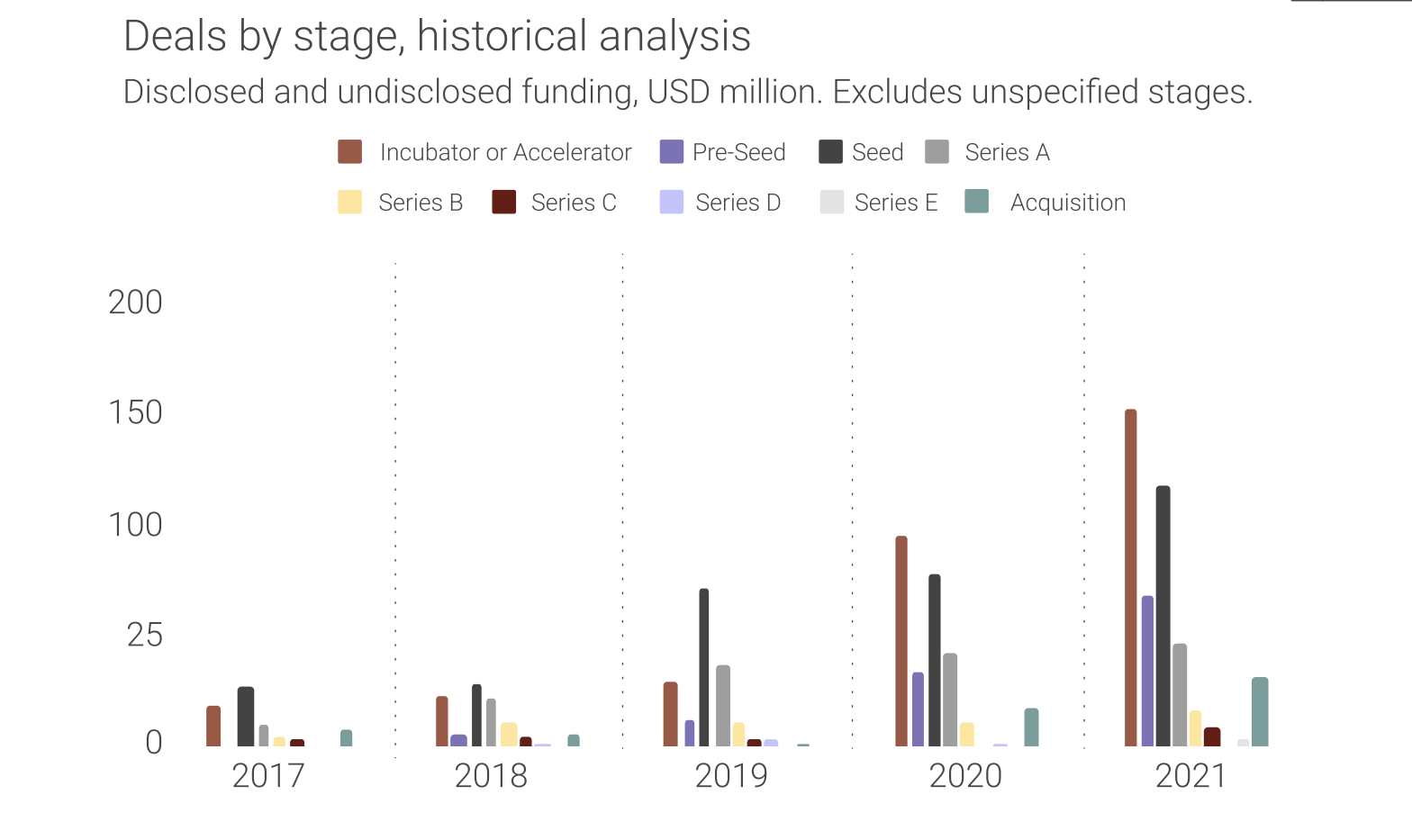
Deals by stage in Africa over the years. Image Credits: Briter Bridges

Startups specializing in digital/mobile payments have received the greatest financing over the years followed by banking/lending startups and insurtechs.  

The latest data shows digital payments space in Africa has also experienced the greatest growth in terms of funding received and total transactions volume over the last decade when compared to other sub-sectors within the fintech space. The growth experienced by fintechs is against the backdrop of the increasing phone ownership and a deepening penetration of mobile money technology and the internet – all of which have made it possible to bypass the sometimes restrictive traditional banking infrastructure.  

Innovations around mobile money and digital payments have allowed for the processing of payments online and offline through USSD or STK commands, over apps or using NFC technology.

“Africa has a massive underbanked and unbanked population, but its growing middle class, increasing mobile penetration and improving communications infrastructure make it uniquely conducive to fintech innovation and mobile financial services,” said Financial Technology Partners.

Emerging fintech services have banked the unbanked, driving up financial inclusion as their uptake solves some of the greatest pain points experienced by businesses and individuals– like sending and receiving money, and accepting payments. Startups in the remittance space like Wari, sureRemit and Paga, have, for example, made it possible for African residents to receive money from overseas easily and affordably. 
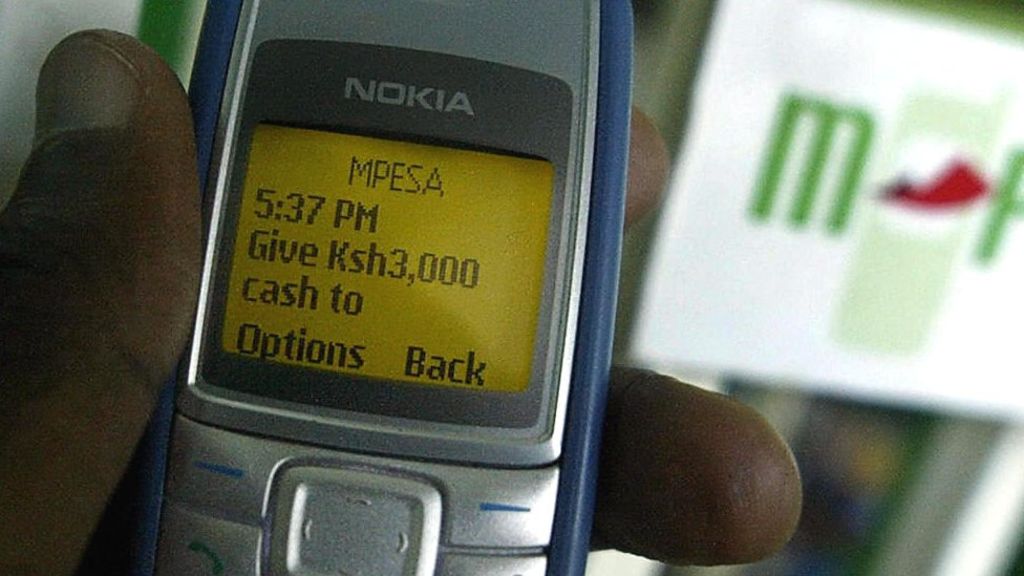
Image Credits: Getty Images

Opportunities for growth

Africa is regarded as the world’s second-fastest growing and profitable payments and banking market after Latin America, according to this McKinsey study, and this only means that the fintech sector is likely to continue to attract investors tapping on the increasing growth opportunities.

The continent is already a global leader in mobile money adoption, accounting for the bulk of the mobile money transactions made in 2020 – a year that saw the number of mobile money accounts rise by 43%.  Mobile money success across the continent is likely due to ease in access brought by advancements in telecommunications technology.

For instance, M-Pesa, a mobile money service by East Africa’s biggest telco, Safaricom, does not require internet connectivity for its customers to send and receive money, as well as to pay utility bills – the wallet turns subscribers’ phone numbers into a sort of proxy for bank accounts. The service recently surpassed voice to become Safaricom’s top earner after the platform’s revenues hit $745 million for the financial year ending March 2021.

Across the region (especially in Kenya) M-Pesa has served as an anchor for a raft of new services that are coming online. In 2012, for example, Safaricom laid the ground for the adoption of lending apps when it first launched M-Shwari – a mobile-based savings and loans product. Many more lending apps have since emerged in the market including Silicon Valley backed Tala and Branch. These now-popular lending apps use customers’ mobile money transaction history to determine the amount of instant credit to extend to borrowers – monies that are then deposited in customers’ mobile money wallets.

Such lending and banking startups have made credit accessible to a majority of people with no credit scores, and who were previously cut out by formal financial institutions due to a lack of banking history data.   

Insurtechs have also over the last few years thrived with the birth of innovative products that are affordable, allowing micropayments, and covering growing risks including those brought by climate change. Innovative products around insurtech have also encouraged the uptake of insurance products – even though the penetration across sub-Saharan Africa (with an exception of South Africa) remains low compared to other regions.

While investments grew in 2021, the bulk of the funding went to a small number of startups. Analysis by Briter, which includes data from both disclosed and undisclosed deals, shows that an estimated $3 billion of the total amount raised went to 20 companies, as over 700 other startups raised nearly $2 billion.


via Tingle Tech

TL;DR: The Google DevOps and Blockchain Developer Bundle is on sale for £22.57, saving you 96% on list price.


Blockchain and DevOps are both buzzworthy terms in the IT world these days. In fact, blockchain technology is poised to change the way business is conducted with promises of safer transactions and revolutionised supply chains. And DevOps is gaining momentum as a means to automate and integrate processes between software development and IT teams. Together, they provide massive advantages. So, someone with knowledge of both could be a significant game-changer for businesses of all kinds.

If you’re interested in learning the ins and outs of these technologies, this Google DevOps and Blockchain Developer Bundle will show you the ropes. With eight comprehensive courses led by ITU Online Training — an on-demand IT training program with a slew of industry awards, including the Best in Biz Awards and Cybersecurity Excellence Awards, under its belt — you’ll walk away with heaps of knowledge on all things Google Cloud Platform (GCP) DevOps, Kubernetes Engine, and blockchain technology.

You’ll kick off your training with some basic courses on DevOps fundamentals and blockchain concepts, including what they are, what they can do, why they work, and all that good stuff. You’ll explore enterprise blockchains like R3 Corda and Ethereum, get a competitive overview of the different blockchain enterprises, discover DevOps best practices, and access demos on AWS and GCP.

Once your foundation is solid, you can dive into courses that prepare you for exams to become a CBSA (Certified Blockchain Solutions Architect) or CBDH (Certified Blockchain Developer). There’s a set of courses that cover software development in the GCP, which will give you a deeper understanding of how DevOps works in cloud infrastructure. 

It’s a lot of information, especially for newcomers in the field. But thankfully, you can work through it all at your own pace — even if that means reviewing the same lessons a few times before it sinks in. You’ll also get lifetime access to the courses, so whenever you need a refresher, they’ll be waiting.

For a limited time, you can virtually enroll in this blockchain and DevOps bootcamp for only £22.57. Even if you don't become a master in the field, you'll at least finally understand what those buzzwords are all about.

Glowing cube
Credit: ITU Online


via Tingle Tech

If you wanted a Samsung Galaxy S21 last year but never got around to it for whatever reason, we have great news: It’s back, and a little bit cheaper now.

At CES 2022, Samsung announced the new Galaxy S21 Fan Edition 5G, or FE. It’s essentially a slightly cheaper and downgraded (especially regarding the camera) version of last year’s flagship. It looks fairly similar, with the same hole-punch selfie cam in the top center of the display and its three cameras lined up in a traffic light-style pattern on the back. Samsung is launching the Galaxy S21 FE 5G in four colors (lavender, white, olive, and graphite) with a starting price of $699 on Jan. 11, or $100 cheaper than the Galaxy S21’s starting price.

As for specs, the FE is close to the original S21, with the same 64-bit octa-core processor under the hood. As for the differences, here’s what you can expect:

  • 6.4-inch 120Hz display (6.2-inch on S21)

  • 177g weight (227g on S21)

  • 8MP rear telephoto lens (64MP on S21)

  • 4,500mAh battery (4,000mAh on S21)

Samsung Galaxy S21 FE phones in different colors
Colors! Credit: Samsung

Aside from that, you can get the S21 FE in two memory configurations: 8GB RAM with 256GB storage, or 6GB RAM with 128GB storage. The only difference between the FE and original S21 in this regard is that the smaller storage size in last year’s flagship didn’t come with a downgrade in RAM; in other words, both options came with 8GB RAM. The most noteworthy downgrade on the spec sheet is the change from a 64MP telephoto lens to an 8MP one. That said, with software processing in modern smartphones, that might not be such a big deal in practice.

The reason Samsung would launch a new version of last year’s phone that’s cheaper and in some respects (like battery life) better is that the Galaxy S22 is widely expected to be shown and released in early 2022, likely in February. Just this week, SamMobile reported that it could come with an astronomical 1TB storage option. That phone, of course, will likely cost a heck of a lot more than $699, so the S21 FE will still be a solid alternative with great specs for a more agreeable price.

Congrats on those who waited a whole year, though. You were rewarded with a bigger screen and better battery. Playing the long game is worth it sometimes, even if the camera might be compromised.


via Tingle Tech

You can’t go wrong with an Apple product — even if it's an older, refurbished one. You’ll actually end up saving a ton of money if you opt for a refurbished MacBook or iPad, and still get the same top-notch Apple quality. 

For a limited time, you can save up to $869 on a refurbished Apple gadget of your choosing. Coincidentally, a handful of Apple device chargers are also on sale for up to 59% off. Happy shopping, Apple fans.

Refurbished Apple deals

MacBooks

iPads

iMac

  • Apple iMac 21.5-inch from 2017 with 8GB RAM, 1TB Fusion Drive, mouse, and keyboard — $686.99 $1499 (save $812)

Chargers for your Apple gear

If you were fortunate enough to get some new Apple gear for the holidays, or you plan on treating yourself to some refurbished gadgets to start the new year, you're going to need some chargers. We've rounded up a handful of chargers — many that work for multiple gadgets at once — that are discounted up to 59% for a limited time. 

BatteryPro Portable Charger for iPhone and Apple Watch

With a massive 8,000mAh capacity, this portable power bank has enough juice to feed a hungry Apple watch for two weeks or an iPhone for three days. It has a high-speed USB port and an integrated Apple Watch magnetic charger to power up both devices at once — and on the go. Get it for $79.99 (regularly $99) for a limited time.

Black charger with black apple watch over it
Credit: Elevation Lab

3-in-1 Apple Watch, AirPods and iPhone Charger

This three-pronged, nearly four-foot charging cable plugs in via USB and offers connections for two Lightning devices and a magnetic connection for an Apple Watch. You can charge up three gadgets at any given time from a single USB outlet. Snag it on sale for just $24.99 (regularly $34) for a limited time.

White charger with USB on one end and magnetic connection and two lightning ports on the other
Credit: Triple Grade

Apple Watch Wireless Charger Keychain

This convenient little keychain charger can deliver multiple charges to your Apple Watch on the go by simply placing it on the magnetic center ring. Just juice it up and slip it on your keyring for an on-the-go power source. It’s usually $49, but you can snag it on sale for $19.99.

Black keychain charger with apple watch wrapped around it
Credit: Go Gadgets

Wireless Charging Dock for iPhone, Apple Watch, and AirPods

Juice up your iPhone, Apple Watch, and AirPods all in one place — and in style — with this wooden dock. It’s made of walnut, topped with felt, and has three dedicated charging spots for your devices. And for a limited time, it’s available for just $101.99 (regularly $146).

Wooden tray with grey felt surface under iphone, apple watch, and airpods
Credit: Loma Living

Porta 3-in-1 Power Bank for Phone, Apple Watch, and AirPods

This clever power bank can juice up an Apple Watch, AirPods, and a phone all at once with its massive 8,000mAh capacity. It has a dedicated charging slot for AirPods, a wireless pad for your watch, and an extra USB output port to charge your Android or iOS device via cable. It’s usually $119, but you can snag it on sale for $49.99 for a limited time.

Black charger with grey circle at base
Credit: Electronic Avenue

4-in-1 Multi-Port and Apple Watch Charger

Another multi-pronged charging cable, this one has a connection for an Apple Watch, as well as a Lightning, USB-C, and micro USB-powered device. It’s also made of top-quality TPE, nylon braided cable, with an aluminum shell, so it’ll actually last. Save nearly 50% for a limited time and get it for just $17.99.

White charging cable with three lightning ports, a usb port, and a magnetic connection
Credit: Tech Zebra

20W Mini USB-C PD Adapter with Magnetic Wireless Charger (MagSafe Compatible)

A 20W USB-C power adapter is the best way to get your phone charged up faster. Pair it with a magnetic wireless charger, and you’ve got the most convenient charging setup around. Get this set of both, specially made for iPhone 12, but compatible with other phones, for just $21.99 (regularly $25) for a limited time.

White power adapter and wireless charger
Credit: Tech Zebra

Magnet Wireless Charger - MagSafe Compatible (3.3ft Cable/2-Pack)

Specially designed for the iPhone 12 series, this magnetic wireless charging pad, combined with a 3.3-foot USB-C charging cable, offers a convenient way to juice up your phone while using it. Get a two-pack on sale for just $25.99 (regularly $29) for a limited time.

Set of two wireless charging pads with usb-c cables
Credit: ZeroLemon

Prices subject to change.


via Tingle Tech

Organizing information from providers, insurers and patients not only takes a lot of time, but increases private healthcare costs. Smarter Health, a Singaporean-based startup, develops technology that allows smoother exchange of data between different parties in the healthcare system, improving patient care and reducing administrative costs. The company announced today it has raised a $5.15 million SGD (about $3.8 million USD) Series A led by East Ventures for product development and to expand in Southeast Asia.

Other investors included Orbit Malaysia, Citrine Capital, HMI Group and Emtek.

The company currently operates in Singapore, Malaysia and Indonesia, and plans to enter into new countries with its new funding. The new round brings Smarter Health’s total raised to $8 million SGD.

Smarter Health’s platform isn’t meant to replace legacy software already in use by its clients. Instead, it seeks to work with them, and reduce manual processes. The startup’s AI-based tech enables secure data exchanges (with patient consent) between healthcare providers, insurers and patients. This enables it to offer a roster of services. For payors and insurers, this includes a patient concierge that recommends specialists, schedules appointments and creates demographic profiles of policy holders. It also automates claims assessments, updates insurers about cases and makes the bill and claims adjudication process faster.

The company has three main customer categories: doctors, hospitals and insurers and other corporate payors, like AIA, Allianz and Prudential, which make up the bulk of its business.

For healthcare organizations and providers, Smarter Health offers specialist recommendations and patient registration tools, a load-levelling solution that shortens waiting times and digitized hospital admissions and claim submissions.

In a statement, East Ventures co-founder and managing partner Willson Cuaca said, “The COVID-19 pandemic has forced insurers and healthcare providers to reflect and re-strategize on their operations, catalyzing digital transformation. Smarter Health is here to make healthcare accessible, affordable and accountable by providing an AI-powered interoperable platform.”


via Tingle Tech

Contact Form

Name

Email *

Message *

Powered by Blogger.